Categories
Parents Zone

Regarding the issue of enrolling in preschool, experts will answer you

Parents Zone

Source: Education experts Leung Wing Lok and Chiu Wing Tak

Question: My daughter is currently in K2, and I want to apply for a private school for her. I plan to start her with tutoring and learning the violin. Is the chance slim? What kind of interest classes or academic classes should she take to increase her competitiveness?

Chiu: I think if you choose interest classes, you should consider what type of activities the school prioritizes. For example, many schools have orchestras, dance classes, or singing classes. If your child is learning the viola, her chances might be limited because the demand for viola players is not as high. If she learns the violin, as orchestras usually require many violin players, her chances will be better. Alternatively, learning to dance or sing can also be beneficial.

Leung: My opinion is relatively straightforward. Some parents pursue learning less common instruments, thinking that schools might prefer that. For example, learning the harp or African drums. However, I believe it is essential to consider the child’s genuine interests. During the interview process, if the school sees the child’s enthusiasm for that particular instrument or music, it will be a plus. Whether she learns a popular or less common instrument, I think the impact is relatively minor. The most crucial aspect is to let the school see the child’s passion for music.

 

Question: My child is about to enroll in kindergarten, but he is a bit timid and afraid that he won’t speak during the interview. What should I do?

Chiu: That’s a significant issue. If he doesn’t speak, it would be a pity, like “making a great effort but falling short at the crucial moment.” I have thought of a method that you can consider. When practicing the interview with your child, you can record the process as if it were a real interview. Then, when necessary, for example, if your child suddenly becomes speechless during the interview, you can show this recording to the school teacher and say, “Teacher, could you please watch this clip? Actually, my child speaks regularly.” Play the video for the teacher. If the teacher has empathy, I believe they will take a look. When the teacher watches it, the child will also show interest, and it will be easier for him to start speaking.

Leung: That’s a good approach, but the prerequisite is that parents need to be well-prepared. I think the most basic thing is to engage your child in conversations about topics and interests as much as possible in daily life, so that your child will speak more naturally when facing strangers. Another thing to note is that parents should not answer for their child when they are not speaking. When you answer for them, you are actually doing them a disservice, akin to cheating.

Question: Is there a problem if we don’t enroll in Pre-Nursery (PN) classes? Because the tuition fees are quite expensive, and some friends say their children take more sick leave days than going to school.


Leung: It’s hard to generalize. Actually, if the family environment permits, and there’s someone to take care of the child, not attending PN classes may not be a big problem. However, some parents worry that not attending PN classes might make it difficult for their child to progress to K classes, and that’s another concern. So, it depends on individual circumstances.

Chiu: Indeed, many parents are concerned that if everyone else attends PN classes and their child doesn’t, their child may lag behind in competition. This is a real worry. As for what to learn in PN classes, they typically focus on cognitive abilities, self-care skills, social skills, and communication abilities. As long as parents can teach these four things to their children, such as teaching them to recognize words, communicate effectively, make friends, and take care of themselves, there may not be a need to attend PN classes.

Question: My daughter was born in mid-January, which is an awkward month. Should I enroll her in the younger class (N class) as a “younger child” or put her in the older class (K1) as an “older child”?

Chiu: Personally, I prefer being an “older child” as there are many advantages to it. Firstly, you’ll be stronger and have the opportunity to become a leader or class monitor in the future. If you’re a “younger child,” others might pat your head, and younger kids being treated like little brothers or sisters might not be too happy. Secondly, being an “older child,” you’ll have more experience. You’ll be a few months older than other kids, so you’ll have more experience, making it easier to absorb knowledge while studying. Being an “older child” also means you’ll have stronger self-care, communication, and social skills, benefiting you in many ways.

Leung: The age difference between children might already be significant and being an “older child” entering school would truly give an advantage at the starting line. There’s another downside to being a “younger child” as it’s possible that your child might not keep up with the rest and could face repeating the same class. Facing the possibility of repeating can seriously affect a child’s confidence, and it’s challenging to regain once it’s lost.

Categories
Parents Zone

Common questions about promoting to Primary School: Experts answer for you

Source: Education expert, Chiu Wing Tak

Question: In the scoring system for enrolling in Primary One, how are twins scored? If the two have different personalities, should they choose to attend the same school for convenience?

Answer: Actually, there is a system in place for twins. There are two possibilities: both are accepted, or neither is accepted. If both are accepted, both children will receive an additional 5 points. It is not a matter of distinguishing between “older twin” or “younger twin.” If the two children have different personalities, it doesn’t matter. In the school I used to work at, we often admitted twins, and if their personalities were different, we would assign them to different classes.

Each class is taught by teachers with different personalities, who can cater to students with different personalities, so parents can rest assured. It’s not necessary to enroll them in two different schools, as it would be burdensome for parents. However, in the case of direct subsidized schools or private schools, extra caution is needed, as there may be situations where one child is accepted while the other is not.


Question: Is applying to 20 direct subsidized or private primary schools the minimum requirement?

Answer: This really depends on individual circumstances, and every parent’s situation is different. Some parents apply to many schools out of concern. The key factor is how many schools you actually interview with. If you plan to apply to 20 schools, scheduling conflicts can become quite severe. However, the most important thing is not to burden the child too much. If the child is suffering, it will also cause distress for the parents.

Another question is, why are you applying to 20 schools? Some parents claim it’s to let their child “warm up.” But actually, you don’t need to apply to 20 schools just to warm up. If you drive the car a few times, you can warm up, right? So there’s no need to apply to 20 schools; around 5 or 6 would be sufficient. Additionally, if a child has to attend multiple interviews, their performance will gradually decline because they will become tired and exhausted. When they start giving up or feeling unsuccessful, it can greatly impact their confidence.


Question: If the first-choice primary school’s first-round interview clashes with the second-round interview of the second-choice school, both of which are popular schools, and the second-choice school has a higher chance of acceptance with the second-round interview, it seems wasteful to give up the second-round interview after the child’s previous efforts. How should I make a choice?

Answer: Are both schools equally liked by the parent? If both schools are equally liked, then of course, choosing the second-round interview school would be the option. Because with the second-round interview, there is a high chance of proceeding to the third round and then getting accepted. If you don’t equally like both schools, even if you have a second-round interview, it won’t be useful. So the key point is whether you equally like both schools. If you really like the first-round interview school, I think you should choose that one because if you are accepted to a school you really like, you will definitely go there. So the choice should not be based on which round of the interview but rather on which school you like the most.

Question: Do prestigious primary schools consider parents’ backgrounds? Will they discount the child’s admission if the parents do not hold prominent positions?


Answer: If it is a government or subsidized school, there is actually no place to fill in the parents’ background. They only consider whether you have hereditary status, whether your scores are sufficient, and whether you are lucky enough. So government or subsidized schools do not consider parents’ backgrounds. But if you are applying to a private or direct subsidized schools, there may be opportunities for them to inquire about your background or require you to provide such information. In the past, many parents were concerned that they didn’t have prestigious occupations, or their positions were ordinary, and they wondered if the school would reject their child because of that.

In my opinion, many educators, even in prestigious schools, do not necessarily consider parents’ backgrounds. They truly focus on the child themselves, and some schools may not even interview the parents. Of course, there are some prestigious schools that are concerned about the family’s income or support, but it may not necessarily be related to the parents’ occupation. However, parents should not decide not to apply to those schools just because they do not hold prominent positions.


Powered-by-PD


返回

Categories
Parents Zone

How to enhance the confidence of shy children?

Parents Zone

Source:Family Marriage Therapist/Art Therapist, Ko Wing Oi


In reality, many parents feel that their children are shy and want to enhance their self-confidence so that they can have more confidence in talking to others. This actually depends on the child’s personality because sometimes children may be slower to warm up or feel more fearful about speaking to strangers. A child’s shyness may be related to their upbringing and experiences during their growth process.


In today’s busy world, many parents have limited opportunities to take their children out to play and interact with other children due to work commitments. This can gradually result in children only feeling comfortable communicating with older family members or siblings. When they encounter peers of the same age, they may not know how to play together. Additionally, many parents tend to speak on behalf of their children, especially when they are unable to express themselves. Sometimes parents may feel impatient and quickly guess what the child wants, saying things like, “Do you want this? Do you want that?” This often makes the child hesitant to express their true thoughts and feelings.


Parents unintentionally prevent their children from learning how to express themselves or become dependent on their parents to speak for them. However, there are various ways to help children communicate with other children or adults in different environments. For example, through interactive activities or games at home, parents can ask the child questions like, “If we meet other children to play at the playground, what can you do to join them?” Role-playing with family members can also be beneficial in helping children gain confidence in social interactions. 

Children primarily learn from their environment, including their parents, siblings, school, friends, and even through sources like online news, television, or cartoons, where they learn behaviors and speech patterns. Therefore, when playing games at home, it’s important to set a good example and show them how to communicate, speak, and express themselves effectively.


Sometimes, it’s necessary to give children time to think about how to express themselves instead of rushing to speak for them or completing their sentences. Even if they make a mistake, it’s important not to say, “That’s not how you do it!” as it can scare the child. It’s better to analyze the situation together and discuss how it could have been done correctly. Parents should try to engage in more analysis with the child, asking questions like, “Why is it not okay to say it that way? Because speaking like that might hurt other children. How would you feel if someone spoke to you in that manner?” Teaching them different communication methods can help them interact with strangers and communicate effectively in different environments.


Categories
Parents Zone

What to do if your child has eye sores?

Parents Zone

Source: Specialist in Ophthalmology, Dr Yu Wang Hon


Eye sore, also known as “stye” in Chinese, refers to the blockage of the sebaceous gland on the eyelid, leading to the accumulation of oil and inflammation. Sometimes, it can be caused by bacterial infection, resulting in an eye sore. What can be done when a child has an eye sore? What can parents do to help relieve their child’s eye sore?


Children have a higher risk of developing eye sores compared to adults because their sebaceous glands are not fully developed, and the channels through which oil is secreted are narrower, making it easier for blockages to occur. However, eye sores in adults are not uncommon either.


When a child or adult has an eye sore, it is generally recommended to apply warm compresses as it helps in the faster dissipation of oil. During the first two to three days of an eye sore in a child, you can start with warm compresses and cleaning. Apply warm compresses at least two to three times a day, using any suitable tool such as a warm towel or even a warm boiled egg. Just ensure that the temperature is not too hot to avoid burning the child’s skin.


If the eye sore does not improve after three days, it is advisable to seek medical attention. The doctor may prescribe antibiotic ointment or even oral antibiotics for treatment, and warm compresses should typically be continued. If the condition does not improve after a week of medication, it may be necessary to seek medical attention again to evaluate if incision and drainage of the eye sore is needed.


To reduce the risk of developing eye sores, proper hygiene is essential. It is recommended to use a cotton ball soaked in boiled or warm water to clean the eyelid, focusing on the area where the eyelashes grow. Both the upper and lower eyelids should be cleaned. Regular warm compresses can also be performed to prevent the blockage of oil glands and reduce the chances of developing eye sores.


Categories
Parents Zone

The expenses of having children are particularly high. How can parents manage their finances effectively for themselves?

Parents Zone

Source: Founder of Piggy Gaga Financial Education, Sang Chan.


Raising children is often described as “bit pricey,” meaning that expenses increase significantly. As parents, how can we manage our finances effectively? Many parents believe that their income level determines their quality of life. While income is certainly related to quality of life, there is something even more important. If every family handles it well, their quality of life can still be greatly improved, and that is how they manage their income.


Each parent can use a simple financial concept, known as the financial pyramid, to allocate their monthly income. The underlying principle of this financial pyramid explains how to divide and allocate every dollar earned to the appropriate areas, maximizing the value of each dollar. By following the construction and operation of this financial pyramid, the financial situation of every family can become increasingly healthy.


At the base of the pyramid, the first step is to allocate around 5% of the income to Mandatory Provident Fund (MPF). After setting aside funds for MPF, the next level is to allocate for our basic needs. Basic needs refer to our necessities such as clothing, food, housing, and transportation. As parents, this also includes the daily supplies for our children, such as formula milk and diapers. It may even include their educational expenses as they grow older.

Approximately 50% of the total income should be allocated to cover basic needs, which is a reasonable level. After managing basic needs, we then have to consider taxes. The amount of taxes varies for each individual. In Hong Kong, approximately 5% of the income is usually manageable for taxes.


After allocating for these three levels, how can we manage the remaining money to gradually improve our quality of life? The first part is allocating around 10% of our income to liquid cash. Another 10% can be allocated to asset protection, where the most important asset is ensuring our own and our family’s well-being


After arranging these two 10% allocations, we have approximately 20% of the income remaining. This 20% can be allocated to asset appreciation, allowing us to achieve some important life goals. Sometimes, parents may ask, “Do we need to be very wealthy as a family to engage in financial management? Can we manage our finances even if our income is just enough?”


High-income families are like large houses, and they may have more things to take care of. They might have a storage room where all the miscellaneous items can be stored and the door closed. The whole house will then become tidy, and the overall management will be much simpler.

But if our house is not that big, metaphorically representing our income, we can imagine a small house. If we take good care of it, it can still lead to a better quality of life. If our income is more abundant, of course, there will be more room for financial management. However, if our income is just enough, it becomes even more important to manage it well.

Categories
Parents Zone

How can parents help young children adapt to primary school life both psychologically and physically?

Parents Zone

Source:  Professor Chiu Wing Kai, Chair Professor of Sociology at the Education University of Hong Kong.


It’s already been 3 months into 2023 and summer vacation will be coming soon, followed by the start of the new school year in September. For K3 students to start their primary school life. However, these students have spent most of their 3-year kindergarten education in online classes due to the pandemic, with little face-to-face interaction. How can parents help them adapt to their new academic and social life in terms of their psychological and physical well-being?


Students who are promoted to Primary 1 are at most at K2 level because they have not returned to school for at least one full year. There are many things they need to adapt to when transitioning from kindergarten to primary school. These include school schedules, daily routines, and learning styles that are vastly different from what they are used to. Kindergarten classes typically last for around 20 minutes, after which they move on to another subject, but in primary school, classes can be 35 minutes or longer, making it difficult for them to maintain their focus. All of these issues can create significant adaptation problems for young students.


So how can parents explain these changes to their children? Firstly, parents should not be too anxious, as many primary schools offer simulation courses and adaptation weeks for new students, as well as school visits. Primary schools are usually much larger than kindergartens, and young students may be excited about the various facilities and opportunities available to them. However, it is best to start talking to them once they begin school, as too much information too soon may be overwhelming. Simply telling them, “Yes, this is what school is like” is often enough.

Additionally, some things that young students may not be capable of now do not mean they cannot accomplish them, they just need time to grow and develop. Parents need to remember that every child has a different growth rate. After starting school, observe their emotional changes when they return home from school, and if you notice any issues, pay close attention to them


It takes time for young children to adapt, but sometimes parents also need to adapt. In kindergarten, we refer to it as the Homeroom(regular class location), where one teacher leads the class, and children usually only see one or two teachers. If parents need to participate or collaborate with the school, they can simply find that teacher. In primary school, each subject has different teachers, so if any issues arise, parents need to consider how to communicate with each teacher.

Categories
Parents Zone

After promoting to primary school, classmates are completely different. How can we assist the children in adapting?

Parents Zone

Source: Psychologist, Dr. Lee Wai Tong

During the kindergarten years, children spend four years from N class to K3, and they will also make some friends, forming their own circles of friends. But after the summer break, when they will be promoted to primary school, everything can suddenly change. Some classmates may continue to attend the same school but may be placed in different classes, causing anxiety and discomfort.

Of course, some children who start primary school and make new friends may forget their good kindergarten classmates. But some children may need more time to develop their social skills, so they may be more concerned about their former kindergarten friends.

Parents can keep in touch with their child’s kindergarten friends, especially since most parents have access to kindergarten parent groups. When the child starts school in September, if they find that they don’t have as many friends to play and chat with as they did in kindergarten, they may start to develop a dislike for school. At this point, parents can help by organizing get-togethers, such as by telling a friend’s mother, “My son really misses your son.”

Let these two children develop a sense of fellowship during this transitional period. After they enter primary school and go through a longer period of time, they will also make new friends. However, during this transitional period, we also want to let them know that their good friends from kindergarten are still around, they haven’t disappeared. They will slowly let go of them as they make new friends in primary school.

But apart from the separation from their friends, they may also have some anxiety, to varying degrees. For example, if a child really doesn’t want to go to school, it can be troublesome for the mother, and the child may even cry when coming back home or refuse to change their school uniform. After all, their world has completely changed since they started first grade, with different teachers, environments, and more intense class schedules.

Usually, after school, a child might say to you, “I miss you so much today!” This sentence is actually a magic word. Where is the magic word? Many parents don’t know and will directly respond, “I miss you too.” However, the child doesn’t understand that when they say, “I miss you so much today!” after school, it actually indicates that they have had some difficulties today.

Going to school is actually very busy. They have to listen to lectures, do classwork, play during recess, have lunch, and participate in various activities. After 35 minutes, they have to switch to another teacher and learn new things. There is actually no space for them to sit and relax, thinking about their parents. But when something doesn’t go smoothly, they will think of their parents first because their parents are their strongest support.

So if a child proactively says, “I miss you so much today!” right after school, parents should ask them, “When do you miss me the most?” Then, we will be able to understand more clearly what they are facing. Is it when they have no friends to play with during recess? Is it when the teacher asks a question they don’t know how to answer? Is it when they don’t understand what they are learning? This will help us know how to better assist them.

Categories
Parents Zone

How can eating habits make your child’s skin healthier?

Parents Zone

Source: Registered Dietitian (Public Health) (UK), Ng Pui-Yu

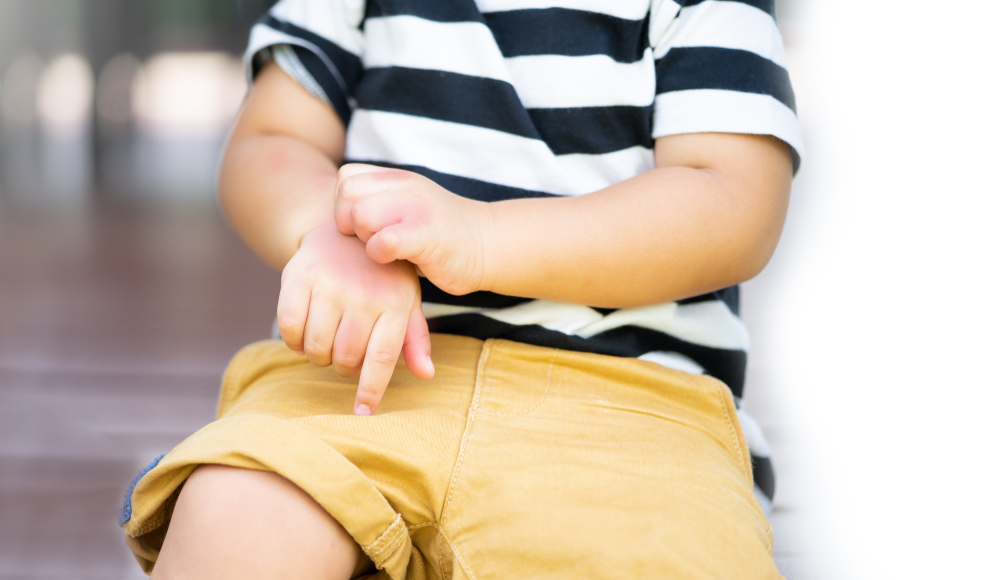
Many kids have dry skin or even eczema, and their parents work hard to find the right moisturizers and other skin care products for them. In fact, in addition to topical skincare products, we should also pay attention to children’s diets. The most direct way, of course, is to drink more water. How much water should be drunk?

 In fact, our body’s need for water is deeply influenced by the weather. For example, in dry weather, we need more water, as well as to account for children’s activity levels and how much they sweat. The water content in food also affects their need for water. If a child urinates every 3 to 4 hours and the urine is light yellow with no strong odor and the stool is not very hard and does not cause difficulty during bowel movements, it usually means that their water intake is sufficient.


For children aged 2 to 5, they need about 4 to 5 cups of fluid a day, and water should be the main source. Unsaturated fatty acids, like omega-3, are also important for maintaining the integrity of cell membranes, which keep harmful substances out and keep the skin moist and flexible. Omega-3 fatty acids can also help calm immune responses that are too strong in people with skin allergies or eczema.

 We should also avoid certain foods, such as candies, cookies, and white bread, which are refined foods. Instead, we should choose low-glycemic index foods, such as brown rice and whole wheat bread, which are important for controlling sensitive conditions. Antioxidants, including common vitamins A, C, and E, are also important and can be found in fruits, vegetables, and nuts of different colors, making them great sources of antioxidants.


In summary, to have healthy skin, in addition to having enough water, you should eat high-fat fish such as salmon or yellow croaker twice a week. You can also replace some cookies and candy with plain nuts, fruits, and so on, and it is ideal to eat a variety of vegetables and fruits.

By the way, if a child’s chewing ability is not well developed, there is a chance of choking when eating nuts. Therefore, we should choose some smaller nuts, such as pine nuts, which are also a good option.


Categories
Parents Zone

Does scare-based education work?

Parents Zone

Source: Parenting Education Specialist, Ken Sir

“If you don’t eat well, I won’t let you watch TV tonight.” In daily parenting, we often teach children in the form of threats, hoping that they will be obedient. But is this method effective? Will it backfire?

One time when I was taking a minibus, I saw a grandmother with two grandchildren getting on the minibus. As soon as they got on the bus, the two grandchildren immediately sat in the back seat, while the grandmother chose to sit in a single seat near the door. As soon as she sat down, she turned around and said to the two grandchildren, “I’m telling you to sit back next to me right now, or else I’ll leave you two here when we get off the bus.” As a result, one of the grandchildren shouted loudly from the back. What was he shouting? “You always say that; I don’t believe you.” This incident demonstrates that many parents are used to threatening their children during their childhood.

What are some examples of this? “If you don’t eat, I’ll turn off the TV,” or “If you don’t finish your homework quickly, there won’t be any ice cream for you tonight,” etc. In fact, these methods of parenting often make children treat things as unimportant. If parents frequently use these types of threats, their children will grow up and no longer take them seriously. Therefore, parents must remember that when we ask children to do something, it is best to directly tell them what we want them to do without adding too many elements of threats or coercion.

Categories
Parents Zone

Getting sick after blowing air conditioning, how can we strengthen children’s immune system?

Source: Senior Nutritionist, Ng Yiu Fun

Many children and their parents go outdoors in the summer and feel very hot afterwards, so they want to go into the shopping mall to enjoy the air conditioning. At this time, if someone sneezes, children are easily susceptible to catching a cold or flu. How should parents deal with this problem? The first part is how to take care of them, and the other part is the diet to strengthen their immunity.

First of all, we should not enter the shopping mall immediately when it is too hot. When you are sweating a lot, you need to wipe off the sweat. In fact, sweat carries away the heat from our bodies, so the process of wiping off sweat makes it easier for the sweat to evaporate and carries away some of the heat from our bodies. It would be better for us to enter the shopping mall when our bodies are a little cooler.

Also, always be prepared with a jacket. Adults are the same; they need to have a shawl, which can be relatively better. On the other hand, if a child’s clothes are soaked, we should prepare an extra set of clothes to replace them, so that the clothes won’t stick to their back and cause them to catch a cold. In fact, the current towels are very long and can be placed on the back. After wiping the sweat with a towel, the clothes can remain dry.

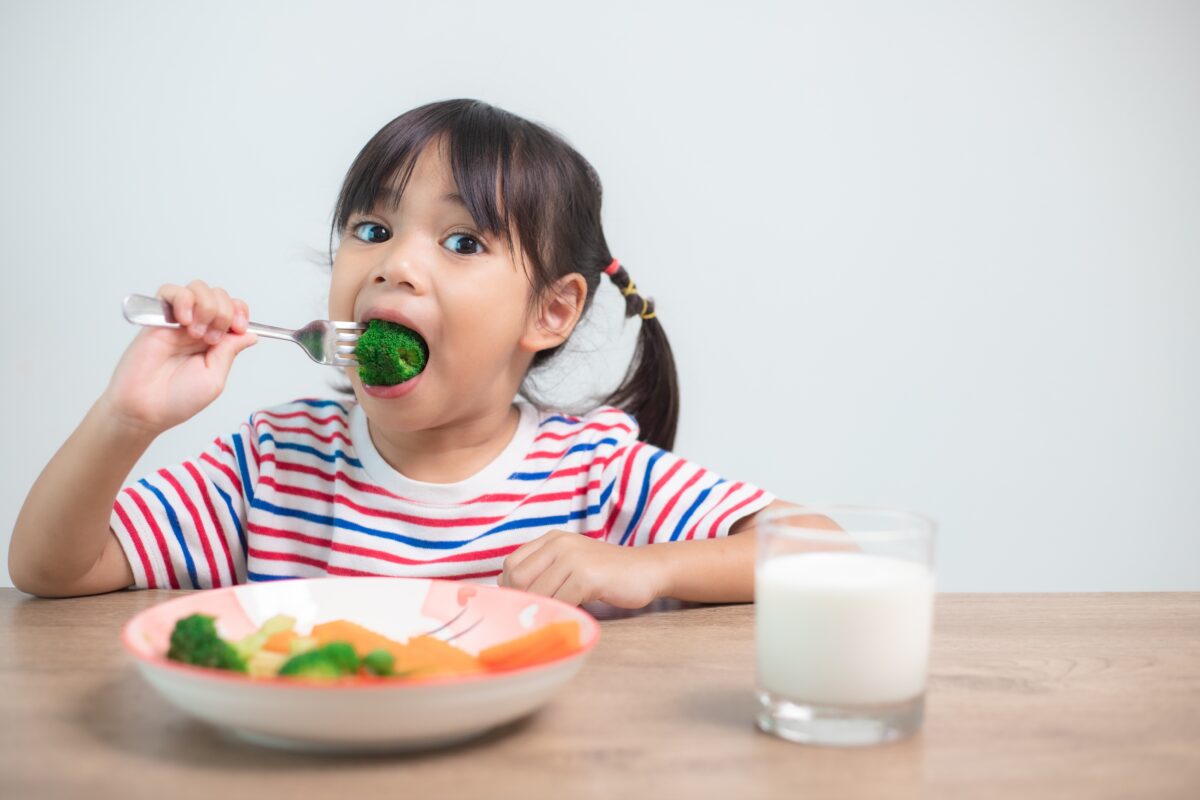
In terms of diet, we can pay attention to whether children have a balanced diet. However, we must remember that children are picky eaters because they are still young, want to be independent, and have many opinions. But when we insist on letting them continue to try every food, even if they don’t eat it today, they can try it again another day. They may try it and get used to it after eating it many times, and then they will not be picky eaters. Perhaps the first time they try it, they may feel like vomiting just after putting it in their mouth, but it doesn’t matter because they have already tried the taste. But we can all be indomitable and keep trying.

 In addition to having children eat their meals, I always recommend adding some millet to the rice when cooking because millet contains many different vitamins and minerals that can enhance the immune system, especially the rich vitamin B complex as well as calcium and iron. Also, remember to eat all kinds of vegetables and fruits; don’t just focus on studying and forget to eat fruits. Vitamin C can also help us increase our immunity.

Of course, there is meat, but the portion size does not need to be excessive. Too much can increase the burden on the liver and kidneys. So how much is enough? For example, for a 2 to 3-year-old child, about one and a half portions the size of a Mahjong are enough, and there is no need to eat a piece of pork chop that is so large. Drinking one to two glasses of milk a day is also a good “superfood” because milk itself contains multiple nutrients, which we call a comprehensive food.

indomitable and keep trying.

In addition to having children eat their meals, I always recommend adding some millet to the rice when cooking because millet contains many different vitamins and minerals that can enhance the immune system, especially the rich vitamin B complex as well as calcium and iron. Also, remember to eat all kinds of vegetables and fruits; don’t just focus on studying and forget to eat fruits. Vitamin C can also help us increase our immunity.

Having such things can help children build a foundation, and we don’t need to take supplements. because it’s difficult to know if supplements are taken in excess, especially now that many people are taking fish oil capsules. In fact, the amount of fish oil capsules may be too much, and it may cause the blood to become thinner.

Another issue is the source of fish, which may be at risk of pollution if we don’t know where it comes from. It’s better to eat fresh fish, and red snapper is rich in Omega-3 fatty acids.

Of course, there is meat, but the portion size does not need to be excessive. Too much can increase the burden on the liver and kidneys. So how much is enough? For example, for a 2 to 3-year-old child, about one and a half portions the size of a Mahjong are enough, and there is no need to eat a piece of pork chop that is so large. Drinking one to two glasses of milk a day is also a good “superfood” because milk itself contains multiple nutrients, which we call a comprehensive food.

Finally, you can cook some soup, which my own children drink and which helps to improve their immunity. They don’t often bring home sickness after school, nor do they often miss school. It’s called “soup with walnuts, cashews, and chestnuts.” I buy two ounces of walnuts, two ounces of cashews, and half a pound of chestnuts, and I add some corn and carrots. You can also choose whether or not to include lean meat. Because it already has a sweet taste, the whole family can drink it, even babies over one year old, to strengthen their immunity and prevent illness.


Powered-by-PD


返回