
Categories
Parents Zone

What constitutes a language development delay in a child?

system

Source: Speech Therapist, Mok Yee Tuen

Typically, babies start making sounds as soon as they are born, such as different crying sounds to express their demands. From 4 to 8 months, they start babbling, which is part of the language preparation period. Children actually go through a ladder of language development, starting with just learning single words and ending with being able to tell stories with their words.

Babies from 9 months to 1 year generally start producing their first meaningful word, such as “ba,”  “ma,” or “ball ball.” From 1 to 2 years old, their understanding and vocabulary expression increase greatly, with the accumulation of single words forming two-word phrases, such as “mommy drink” and “eat bun bun.”

From 2 to 3 years old, children generally speak in longer sentences and can express different needs. For example, they like to add a word to the two-word phrases, forming three-word combinations, such as “Daddy eat bun” and “I want grandma.” Some children start using adjectives, such as “sister eats a big apple.”

 

Young children generally recognize more different sentences and start using conjunctions after 3 and a half years old, and by 5 years old, they slowly understand how to combine different sentences and use more conjunctions and start to narrate things logically, that is, by telling stories.

In fact, the language development of young children is slightly different for each person, but through empirical research, we also have some important reference indicators to see if a child may have a speech delay.

The first is that there are no words at 2 years old.

Second, no sentences appear before the age of three.

The third is that speech is unclear and hard to understand after 3 years old, 

Fourth, sentences are still unclear after 5 years old.

If the child is not speaking more and more as they grow, parents should seek the help of a professional to assess and train them as soon as possible.


Categories
Parents Zone

Are you a “competent parent”?

system

Source: Senior Parenting Expert, Bally 

How can we know if we are competent parents? We can find out how the children get along with their parents and how they behave by observing them, and here are five things we can observe.

First, trust the parents. If a child trusts their parents, we can see it in their eyes and in their responses when they communicate with their parent. When a parent talks to a child, the child looks intently at the parent, understands what the parent is saying, and responds clearly with “Yes! I understand,” and then follows instructions. This means that parents usually have good communication with their children.

Parents often tell their children why they should do something, whether it is a good thing to do, or what they think of it. For example, “I think you did a good job when a child fell down and you walked over to pick him up right away.” When parents tell their children how they feel and praise them for doing the right thing, they will be more willing to listen to their parents’ feelings and reactions, and they will gradually build trust.

Second, be brave enough to tell your parents. If children are willing to tell their parents when they encounter certain situations, it proves that their parents give them a lot of space. They are not afraid of being scolded by their parents, and they believe that their parents will give them the right direction, teach them what to do, and accept their wrongdoing. Therefore, children will slowly do what their parents think is right under the safety net. Communication between parents and children is very important, and we need to give them confidence in order to build a harmonious relationship. No matter what happens to them, it is very important that they are brave enough to share with their parents what has just happened or how they feel.

Third, have self-confidence. How can we tell that a child is confident? If a child looks at his or her parents before doing something and gets a positive look from them before doing it, in this case, the child is obviously not confident enough because he does not know what is right and what is wrong.

When a child can do something confidently in different situations, the parents can see that they can first give affirmation and then slowly tell him whether it is actually right or wrong to do what he just did, which over time will build the child’s confidence. They will know that they do not always have to do something right, as long as they have confidence, they can try to do it first. We will slowly build children’s self-confidence by reminding them of this process.

Fourth, have empathy. If children have empathy in many cases, for example, when they see a child fall, they will go to help the child; when they see an old woman crossing the street, they will want to help her. The fact that he is so empathic indicates that his parents, who are a competent pair of parents, have brought this message to him in their daily lives. 


Because our future education hopes that children will not only take care of themselves but also care for society and pay attention to everything in society, empathy is very important. If children are able to take care of themselves and other people around them in their daily lives, it is important to be empathetic. So parents better pay attention to their own way of dealing with children, because if we have empathy, children will naturally have empathy.

Fifth, the ability to take care of themselves children are capable of taking care of themselves, such as eating, dressing, putting on shoes, etc. This also means that their parents are really competent at their jobs because they have taught them “how to fish, not fish for them.” As parents, we should teach our children that they are capable of coping with their own daily lives. If a child does not learn to put on his or her own school uniform by the end of K2, he or she will lose self-confidence over time and have a tendency to become dependent, gradually losing the ability to take care of himself or herself. It is important to be a competent parent to teach children to take care of their own lives.


Categories
Parents Zone

Children often shirk their responsibilities, and parents should be held accountable?

system

Source: Psychotherapist, Lee Wai Tong

Whenever something happens, children will use different excuses to shirk their responsibility toward others. Parents may then scold the child for this, but this may make the child avoid taking responsibility. Faced with this situation, what can parents do?

First of all, when parents ask children, “Why didn’t you finish the work?” or “Why don’t you understand?” Parents want their children to take responsibility. But at this time, the child will want to shirk the responsibility and give it to someone else, but at the end of the day, the parents actually want the child to take responsibility. You should know that responsibility starts with the child having the time to make decisions because having the time is called having a sense of autonomy. If children can have a sense of autonomy, they will be more likely to be responsible.

For example, if he does not know how to do his homework and is asked why he does not understand, he will say that the teacher did not teach him, the teacher did not teach him well, or that the other students were noisy. At that moment, if parents continue to say that he is not concentrating in class, they will only make the child throw the responsibility further away. So at this point, we need to know how to do better since we are facing difficulties and then work with the child to figure out how to do it.

The child will feel responsible for doing a good job, so naturally he will put the responsibility back on himself and let himself do it. And when children can do things on their own, they will be more willing to take responsibility. This is why I always say that the most important thing for parents is not to be accountable because accountability only teaches children to unload their responsibilities, while we can help our children take responsibility and accomplish things together. This is the most important lesson we often teach our children about responsibility.

Categories
Parents Zone
system

Source: Psychotherapist, Lee Wai Tong

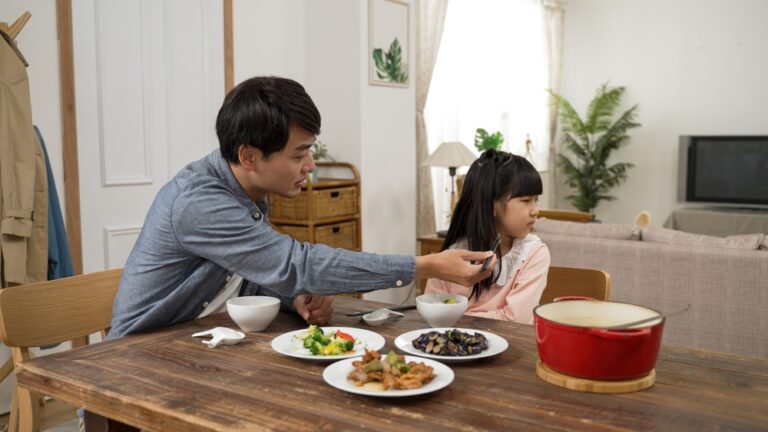
The parents begin feeding the baby milk and gradually introduce paste from the time the baby is born. Then children can start to hold their own utensils and eat on their own, one bite at a time while watching them grow up. But when the children reach the age of 6 to 7, they will suddenly ask their parents to feed them. What is the reason for this? How can this be resolved?

Whenever children grow up, their parents are happy, especially when their children eat. In the past, they had to be fed by their parents, but later they learned to use utensils and eat by themselves, which was originally a very happy thing. However, many parents do not understand that when children can eat on their own, they begin to ask their parents to feed them. This is because the intimacy of parental feeding feels good and may make children want to be fed.


When children are young, it is fun for parents to feed them, but when children grow up, it is a headache for parents if they still want to be fed halfway through a meal. We don’t want to spoil the atmosphere of the meal because of the feeding problem, so we need to learn that when children ask to be fed in the middle of a meal, we can solve the problem in the following ways:

Parents can say to their children, “If you take two more bites of rice, mommy and daddy will start feeding.” The next time the same thing happens, say, “If you eat three more bites, mommy and daddy will start feeding,” gradually shorten the time of parental feeding, and gradually extend the time of children eating on their own. Later on, there is a chance to finally just feed him a bite to maintain the intimacy of the parent-child relationship but also to make the eating atmosphere more interesting.


Categories
Parents Zone

Before becoming enraged at their children, parents should ask themselves these       three questions

system

Written by: Caritas Rehabilitation Services,Clinical Psychologist, Yu Kwok Ting

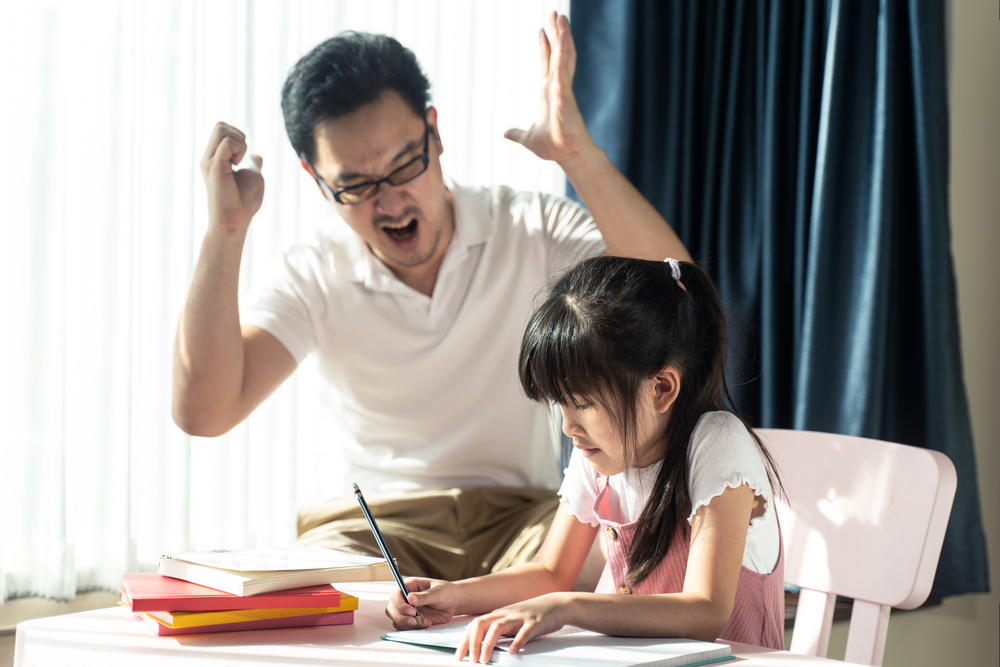
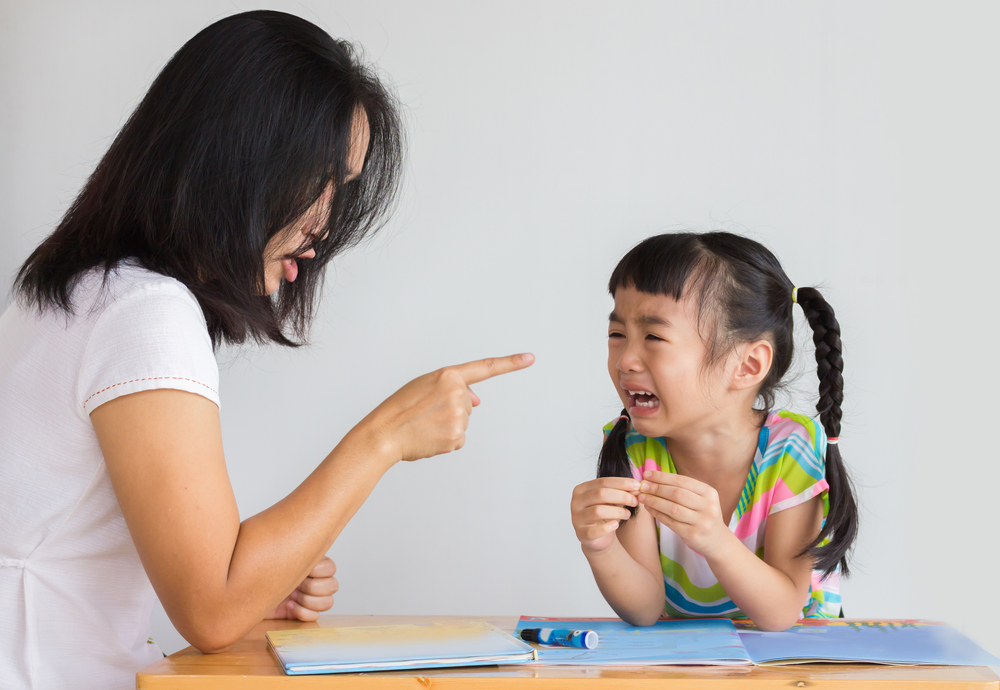
Some parents may be more impulsive and even have a habit of blaming their children for  problems such as disobedience, deliberate anger, or naughtiness. When children fail to do  what they want, they become angry with their parents, but this will gradually alienate them from their parents, which will damage the parent-child relationship in the long run.

Parents’ personalities, families of origin, and parenting methods learned in different ways  will affect parent-child relationships. And the adults’ thoughts will influence their mood. If adults find themselves in frequent conflicts with children, which affect the parent-child      relationship, we can ask ourselves three questions.

  1. Whether there are other possibilities

If a child is not able to do all the homework required by his or her parents, the first thing   the parents think is that the child is just having fun and not doing homework, but the real    reason may be that they do not know how to do it and need parental guidance. If parents    take preconceived notions as facts, they may ignore the needs and difficulties of their children and damage the parent-child relationship


  1. Whether one’s own thoughts have been confirmed

Some parents often say that their child is “deliberately annoyed” and then see their child’s  behavior as disobedience, but perhaps the reason for the child’s behavior is carelessness,    but the parents are influenced by their subjective feelings and misunderstand their child.


  1. Are your thoughts helpful to the goal?

If a parent’s goal is to mend the parent-child relationship, but he or she often holds the idea that the child is “deliberately working against him or her,” is this thinking really helpful to his or her goal? Parents can try to find more realistic and justifiable ideas to help them      achieve their goals.

Categories
Parents Zone

Spinal problems should not be ignored. How to do the test at home?

system

Written by : Chiropractor, Dr. Wan Man Ho

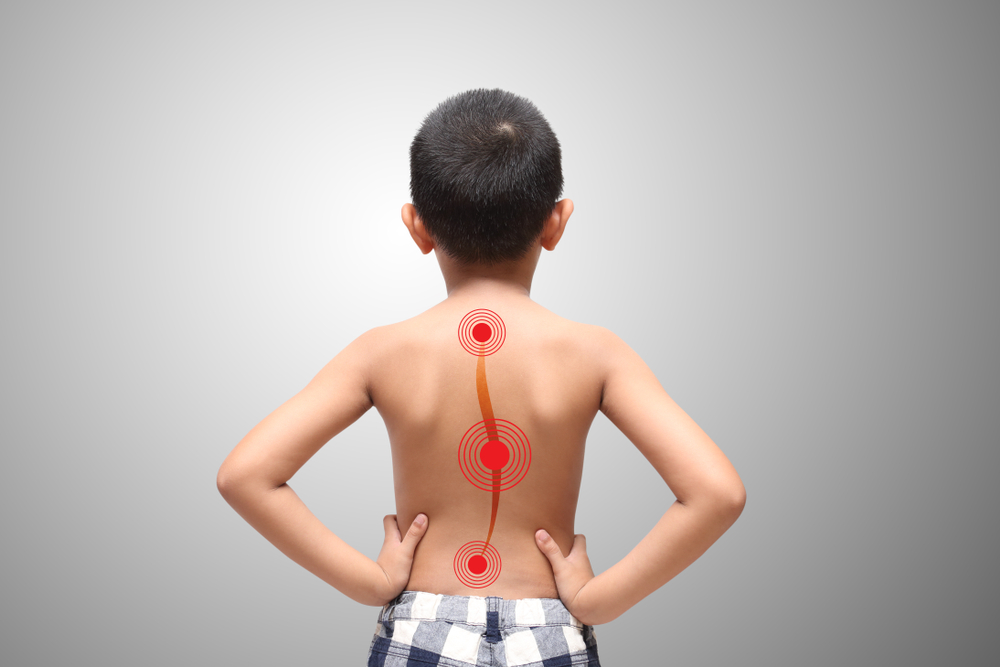
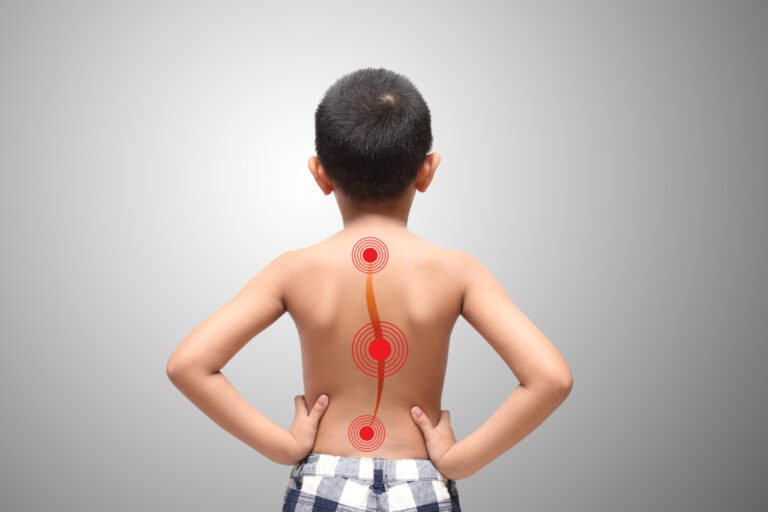
Children are prone to sitting problems, even scoliosis and kyphosis. Parents should find out their children’s problems early and make corrections. But how can parents tell when their   children have scoliosis and kyphosis problems?

For scoliosis, parents can try the Adam Test, a common test used by chiropractors, by  asking a child to bend forward with his hands on the ground and see if there is a problem  with the muscles on either side of the spine. If there is, it means that there is a high probability of scoliosis.

In terms of kyphosis, it means looking from the side, the head is in front of the body, as if  the neck is stretched out, or the head is bowed for a long time and the shoulders are bent    forward. Most children in Hong Kong have a functional condition, and often, as long as they are reminded to sit up straight, they will be able to sit up straight and stop having a  kyphosis.

To improve the kyphosis, the most important thing is to open both shoulders, use the strength of the waist to lift the chest, and bring the chin back near the head. This is the most correct sitting posture and will improve the kyphosis.

Spine problems are related to the foot?

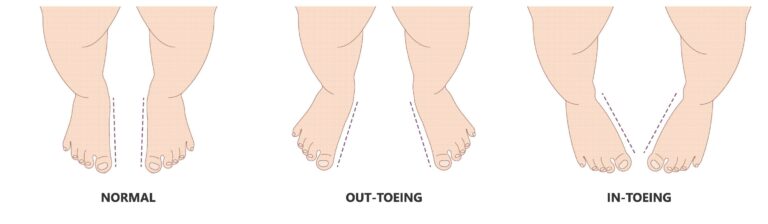
Some children have flat feet, resulting in a bit of in-toeing or out-toeing. The shape of the  foot will slowly affect the pelvis and create some highs and lows.

If a child often bumps his knees when learning to walk or even trips over himself after a  few steps, this may be a case of in-toeing or even an imbalance of the feet.

If your child has any of these problems, you should take him or her to a professional, such as a chiropractor, physiotherapist, or even a podiatrist, to get checked out. 

Categories
Parents Zone

Why do children entering “Trouble 2” start to get angry easily?

system

Written by: Psychotherapist, Lee Wai Tong 

Many parents have found that their children have felt a little more angry since the age of 2, which is generally referred to as “Trouble 2.” In fact, anger is an emotion that children feel when they do not get what they want. However, in addition to anger, there is also the feeling of disappointment. However, many parents ignore it and only see the child’s anger without understanding the disappointment behind it.

In fact, we focus more on the feeling of disappointment. For example, when he cannot get an object or buy it, our reaction will be “it’s a pity that we can’t get it this time,” and we will hug him. In fact, he will feel disappointment, and the feeling of anger will be replaced. Does anger always lead to hitting? This is another question. Some parents say that I did not hit him, but why would he hit someone when he is angry? It is, in fact, related to the intensity.

 For example, if a child is holding a box of toys and wishes to purchase it, but the parent does not wish to purchase it. Instead of snatching it away and saying no, tell him, “Yes, you can’t buy it this time,” “You can hold it and look at it,” and “Put it down after looking at it.” When the child feels the feeling of anger, not force, the child will eliminate the idea of “hitting.”

Categories
Parents Zone

Nurturing children’s interest in reading

system

Written by : New Horizons Development Centre

                   Registered Educational Psychologist Pang Chi Wah

A hundred years ago, illiteracy was a normal thing. But since education became widespread decades ago, it is now necessary to go to school to receive an education. Learning is not only through the direct transmission of knowledge by teachers through language, students also need to read textbooks by themselves. When doing homework or taking exams, students are tested on their concentration and speed when reading.

More than 30 years ago, the basic qualification for firefighters was graduation from the sixth grade, but today, even college graduates may not be able to get into firefighting. Modern fires do not only require firefighters to be physically fit and able to put out fires with water, but some fires are very complex and require special methods and chemicals to put out.

Reading skills are needed in all walks of life

Whether they are blue-collar or white-collar workers, they need to handle documents and files, read other people’s reports or instructions, and write their own reports. So the need to read and handle paperwork is everywhere. In the past, illiterate people could withdraw money from banks, but with modern ATMs, not only can we withdraw money, but we can also pay different fees, but our concentration and speed in reading is very much tested.

When we are adults, we have to sign many contracts, and there are many clauses in the contract, and the font size is small but quantity is large, it is also a big test of reading. Modern people often have to search for information on the Internet, which also requires the ability to read, that is, the ability to visually search for symbolic words and speed.

Nurturing children’s interest in reading

Cultivate children’s interest in reading and develop good habits. Although reading books is fine, reading newspapers is a good habit that everyone must develop, whether they are civilians or presidents and professors, they need to read newspapers regularly because this is the only way to keep up with the information of the society, to understand the changes around the world, and to master the liberal thinking.

Although there is now a very convenient TV news, as if they do not need to read, listening to TV news seems more convenient. But in fact, in addition to reading newspapers to learn the news and current events, more continuous training of the ability to deal with words and reading newspapers can be carried out at anytime and anywhere, newspapers can be said to be the textbook of the Society in general. This is everyone “to do old, learn until old,” the rule of thumb.

Categories
Parents Zone

“Will my son be too thin if he doesn’t eat much?”

system

Written By: Founder of Kat-Spirit Nutrition Centre 

                   Senior Dietitian Ng Yiu Fun

Many parents will bring their children to see me and say, “Is my son too thin? or “His bones are very obvious” or “Look, his ribs are visible, and his arms are still very small! In fact, many parents feel that their children are thin, but in fact, are these cases really thin?

In fact, whether it is thin or not, we have to look at the growth chart. If the child is below the growth line, he or she is considered thin. If the child is thin, there is no need to worry too much about health problems. Some parents may say, “No! His classmate next door eats a whole bowl of rice at every meal and eats a lot of meat, but compared to my son, who only eats a few bites of rice at every meal, he really eats too little! I have to find a way to catch up with the next classmate’s meal, so that he can have enough nutrition!


Many parents have a comparative mentality, and I believe that everyone’s needs are actually different. Some children may be really taller, but some children may be genetically influenced, relatively shorter and smaller-boned, so their needs are certainly not the same and their parents don’t need to worry too much.

I believe one thing we can do is to keep a happy mood when we eat at home, not to see if he eats every bite of rice, whether he “contains rice” or eats the whole bowl of rice, because constantly forcing him will only add pressure to the child when he eats. If we want him to eat a little more when he eats, it is actually very simple, just prepare a smaller portion of rice in the bowl, let him finish it, and then let him add more rice, so that he has a sense of success, but also help him increase his appetite.


In addition, the meal should not be too monotonous. Some parents say they have cooked their children’s favorite foods to suit their tastes in the hope that they will eat more, but unfortunately the results are not very good. Even if it’s a favorite food, it’s boring and tiresome, so they don’t eat it, which has the opposite effect. Therefore, parents should think of more colorful or different tasting dishes to make their children feel new and interesting, so that they will not feel bored and eat less.

Categories
Parents Zone

Three characteristics to let you know whether you are a “monster parent”?

system

Written by: Director of the Hong Kong Institute of Family Education

          Dr. Tik Chi-yuen

Although parenting is a natural duty, it is not “inborn to take duty”. Previously, I discussed with senior government officials the current difficulties of parents and how to effectively promote parent education.During the discussion, we all felt that parent education should be strengthened because parents are becoming more and more “monsterized”, resulting in high pressure on parents and heavy burden on children.

If parents want to determine whether they are “monster parents”, they can assess in three aspects.


  • Firstare you always worried about your child losing at the starting line, so you ask your child to learn more and practice more?
  • Second, do you often worry about your children doing wrong, afraid that they face failure, so give children a variety of protection?
  • Third, do you often feel stressed by your children’s studies and daily life, worrying that your children will not do well in everything, so you are emotionally disturbed?


One of the problems with “monster parents” is that they focus too much on their children’s performance, especially in terms of academics and grades. In fact, there are more important things we should be concerned about, and that is the parent-child relationship. Parents and children are meant to have a mutual emotional relationship, not a ministry relationship. In the family, we talk more about love and affection rather than dictations, tests, and exams. Having a good parent-child relationship is the cornerstone of healthy growth for our children.